
Finding the right data automation tool makes a huge difference in how you handle your day-to-day operations. But with so many options out there, it can be hard to know where to start.
By combining expert reviews with user feedback, we’ve created a ranking of the best data automation software on the market.
All based on key factors like cost, integrations, ease of use, and overall functionality.
The 13 best data automation tools are:
Tool | Best For | Starting Price |
1. Mammoth | Data automation | $119/month |
2. Alteryx | Advanced workflows | $5,000/year |
3. Fivetran | Creating data pipelines | $500/month |
4. Stitch | Simple data syncing | $100/month |
5. Talend | Data governance | Custom Pricing |
6. Zapier | App automation | $19.99/month |
7. Tray.io | Low-code workflows | $595/month |
8. Workato | Enterprise integrations | $10,000/year |
9. Power Automate | Microsoft integrations | $15/user/month |
10. Informatica | Data management | Custom Pricing |
11. UiPath | Robotic Process Automation | $420/month |
12. Parabola | No-code data transformation | $80/month |
13. Apache NiFi | Real-time data processing | Free (open-source) |
To make this guide useful, we’ll break down each tool’s pros, cons, and standout features, so you can find the one that fits your needs best.
Whether you need something simple or more advanced, this list will help you find the perfect fit to save time and reduce your manual data work.
Let’s jump right in, starting with our top overall pick, Mammoth.
1. Mammoth Analytics
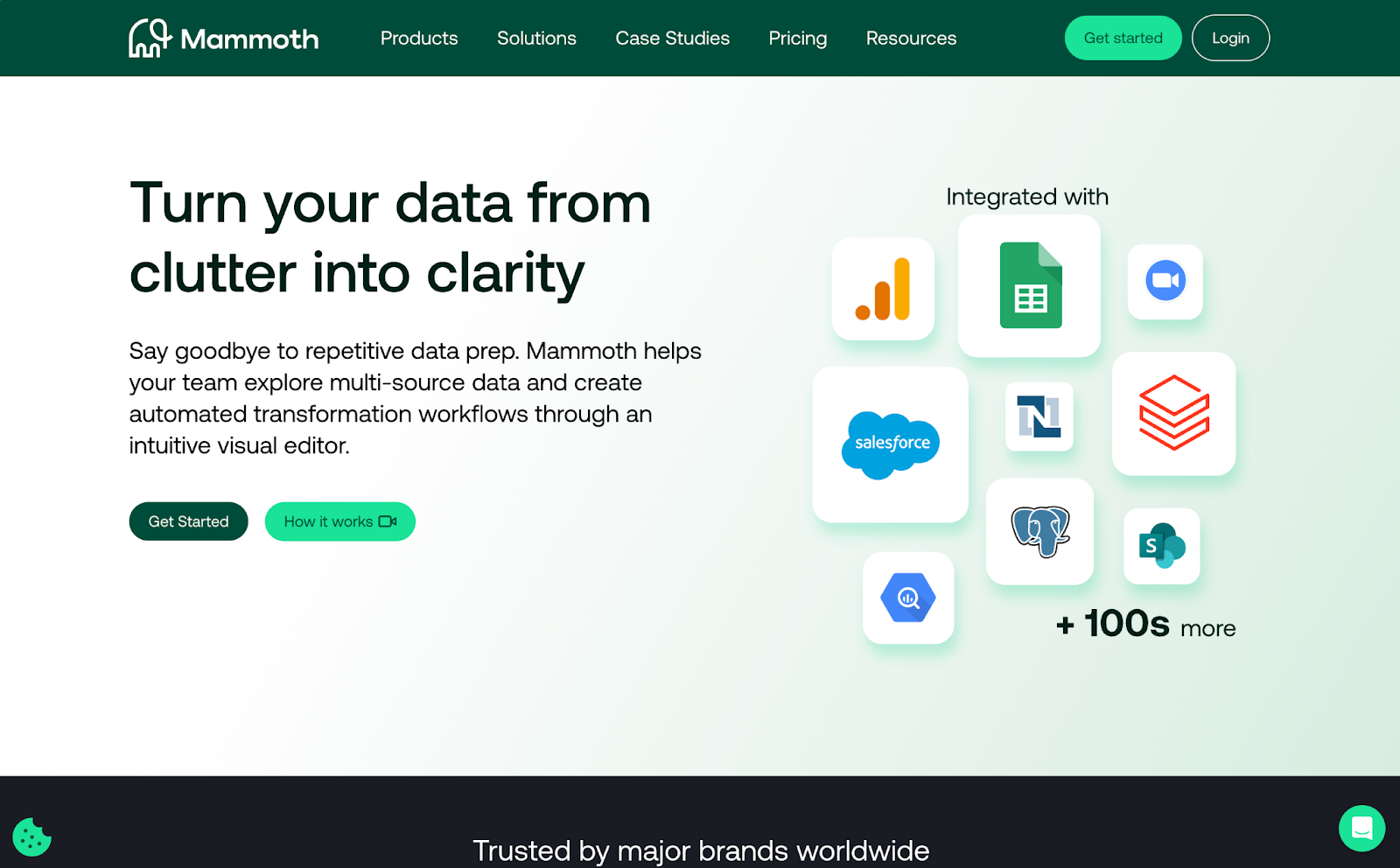
Mammoth is a great tool if your goal is to simplify how you handle data.
We’ve built it to be the perfect for automating all those time-consuming data tasks like cleaning, merging, and transforming data from different sources.
Even better, you don’t need to be a coding wizard to use Mammoth. The no-code interface makes it easy for anyone on your team to set up automated data pipelines.
One thing Mammoth does really well is help you manage huge amounts of data from different tools. It connects to over 100 data sources, so whether you’re dealing with databases or cloud apps, you can bring everything together in one place.
Mammoth is the only tool on this list that lets you drill into your data to perform deep, granular explorations.
Plus, once you set up your automation rules, it takes care of the rest, keeping everything up-to-date without you lifting a finger.
Real-world example: Starbucks uses Mammoth to process over 1 billion rows of sales data. This saves them a massive amount of time on manual reporting, while letting them make quicker, more informed decisions.
Mammoth Pros
- No coding needed—you can automate data workflows in a few clicks
- Works with tons of data sources (over 100!)
- Is an all-in-one, complete data platform for preparing, cleaning, transforming, and automating data
- Comes with its own built-in data warehouse
- Can be used to do deep, granular data explorations
Mammoth Cons
- Doesn’t have its own data visualization tools (yet), but works well with dedicated ones like Power BI and Tableau
Mammoth Pricing
Mammoth starts at $119/month and comes with a 14-day free trial.
If your team is tired of manual data work and needs a more automated, user-friendly solution, you can sign up to try Mammoth here.
2. Alteryx
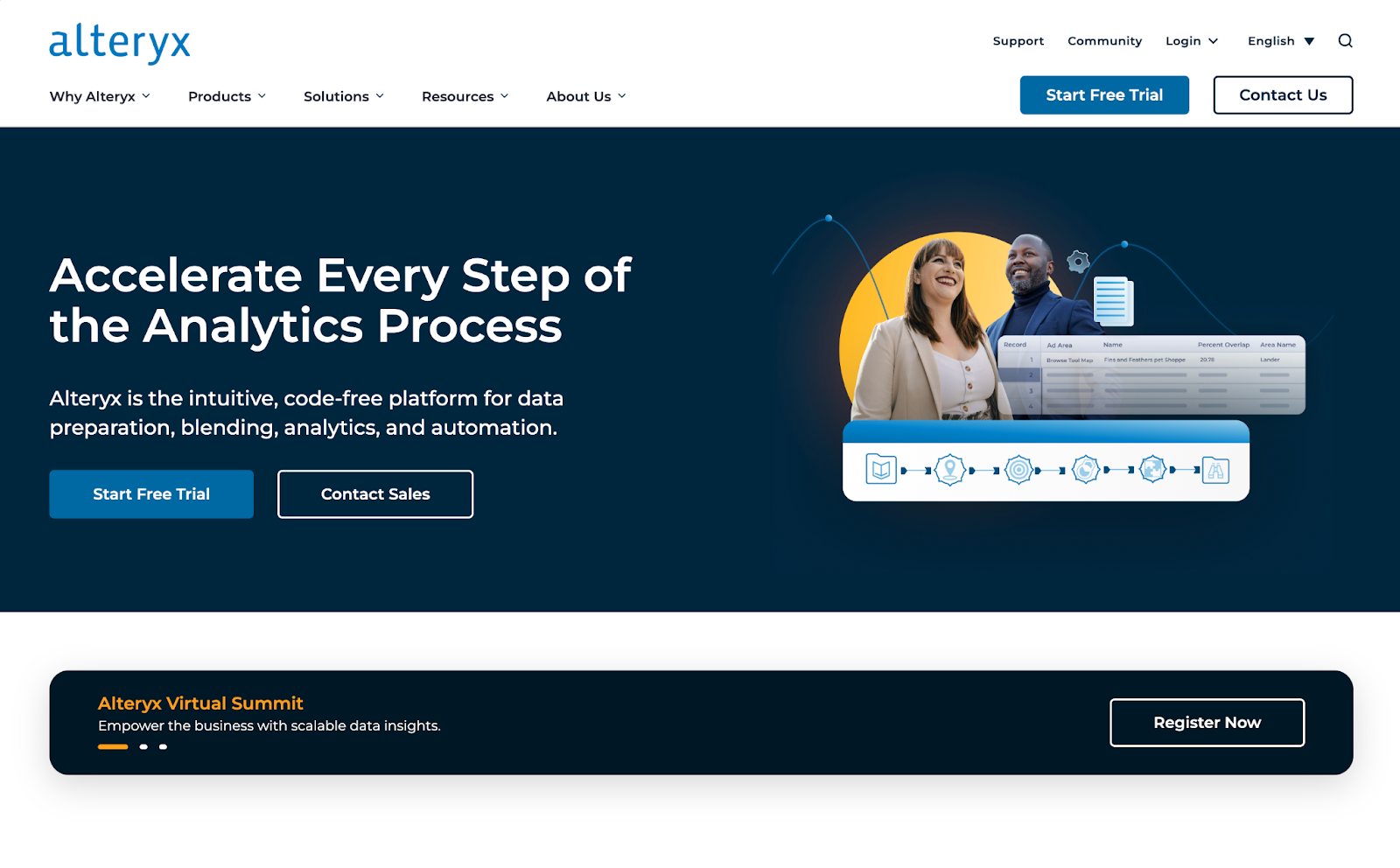
Alteryx is a powerhouse when it comes to automating complex data processes.
If you’re handling big datasets, need to clean and prep data from multiple sources, or want to run advanced analytics, Alteryx can do it all.
Their drag-and-drop interface makes it easy for anyone, even those without coding experience, to build automated workflows, saving time on manual tasks like data blending and analysis.
One of the things that makes Alteryx stand out from competitors is its ability to integrate with 80+ data sources, like AWS, MySQL, and Salesforce.
Plus, it’s packed with features for advanced analytics, like predictive modeling and machine learning.
Alteryx Pros
- You can automate everything with a drag-and-drop interface
- Comes with machine learning and predictive modeling tools
- Work with over 80+ data sources
Alteryx Cons
- Expensive, starting at $5,195 per year for a single license
- Visualization features are basic compared to tools like Tableau or Power BI
- It’s a technical tool designed for technical people. If you aren’t familiar with coding, there may be a higher learning curve for you.
Alteryx Pricing
Alteryx starts at $5,195/year for a single user with their Designer plan, but they also offer custom pricing for larger teams or enterprises.
3. Fivetran
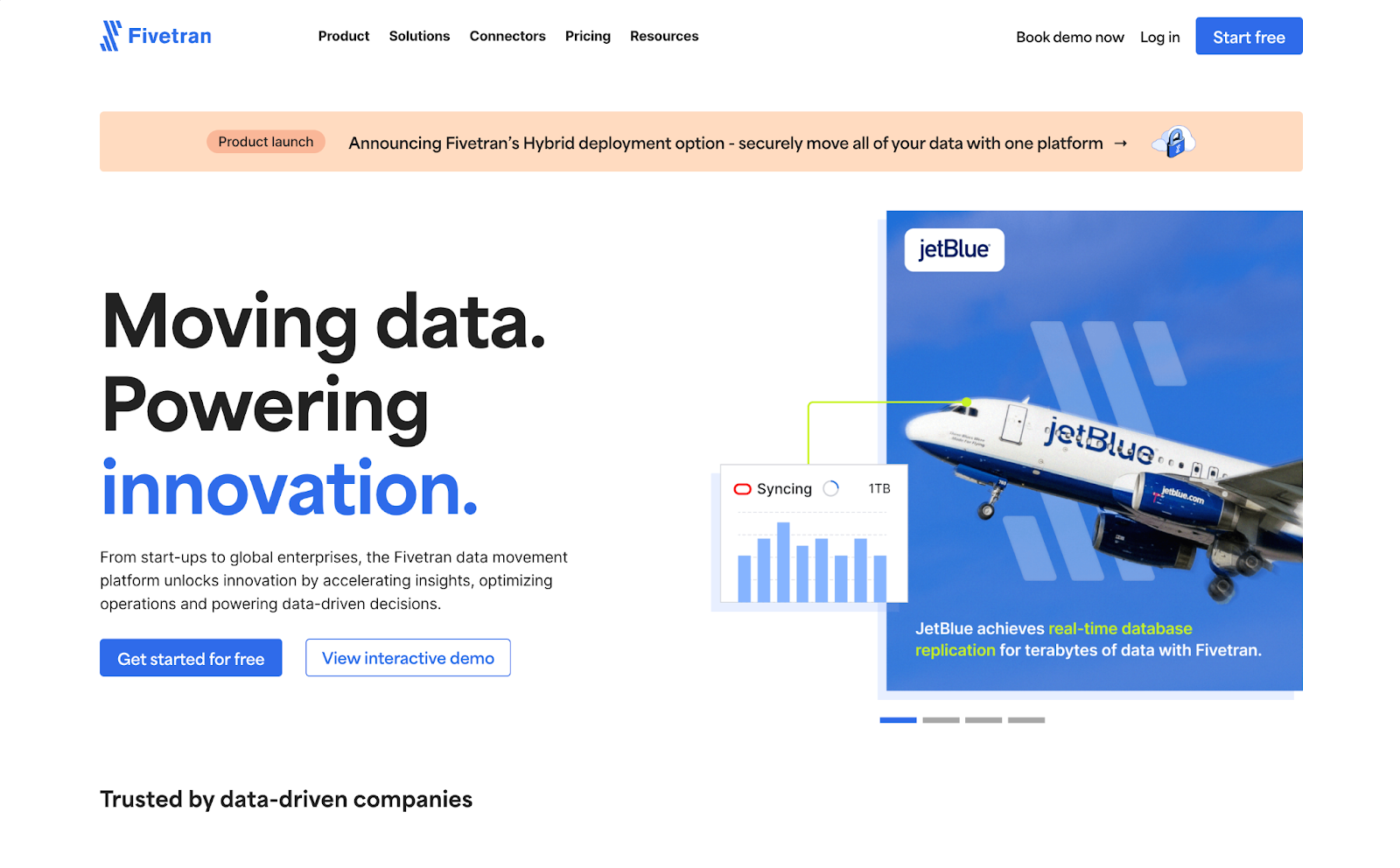
Fivetran is good for pulling data from multiple sources like CRMs, databases, and cloud apps, then syncing it all to your data warehouse.
Helping you to focus on analysis instead of wrangling data.
Once your connectors are set up, Fivetran handles everything for you, making sure your data is always fresh and ready to use.
What makes Fivetran even more useful is how easy it is to get started.
There’s no coding required, and with over 100 pre-built connectors, you can quickly plug in your data sources and let Fivetran take care of the rest.
Fivetran even adapts to updates in your source systems automatically. So, you don’t have to worry about schema changes messing things up.
Fivtran Pros
- Your data is automatically synced and kept up-to-date
Fivtran Cons
- Pricing adds up fast with increased data usage
- Relies on pre-built connectors, so you can’t easily build custom data pipelines with it
- It’s very technical, which makes it hard to use if you’re a business user
Fivetran Pricing
Fivetran offers a free plan for small data volumes, but starts at around $500/month for more advanced plans. Costs increase based on how much data you sync.
4. Stitch

Stitch is an easy-to-use, cloud-based tool that can help sync your data from multiple sources into a centralized warehouse.
If you need a simple, budget-friendly solution for managing data pipelines, Stitch is a great option. It doesn’t try to be overly complicated, it just does the basics really well.
With more than 100 connectors, Stitch makes it easy to pull data from places like Salesforce, Facebook, and Google Analytics into data warehouses like Snowflake or BigQuery.
It’s built for businesses that want to get data from point A to point B without a lot of fuss, perfect for smaller teams that don’t need extensive transformation features.
Stitch Pros
- Pricing starts at $100/month
- Offers 100+ data integrations
Stitch Cons
- Data transformation is basic
- No data visualization tools
- It’s very technical, and not easy for business users to pick up
Stitch Pricing
Stitch’s pricing starts at $100/month for smaller businesses, with more advanced plans available for higher data volumes.
5. Talend
Talend is another good choice for larger teams dealing with complex data.
With it, you can connect, clean, and manage data from a wide variety of sources—both cloud-based and on-premises.
What really makes Talend stand out is their Data Fabric platform. An all-in-one solution, it combines data integration, quality control, and governance in one place.
Talend is also low-code, and scales up as your data needs grow, making it a smart long-term choice.
Talend Pros
- Can handle large, complex data sets
- Has built-in data governance
Talend Cons
- Tricky to master without training
- Premium features, like advanced data tracking, are only available on expensive plans
Talend Pricing
Talend’s pricing depends on your specific needs, so you’ll need to reach out to their sales team for a custom quote.
6. Zapier
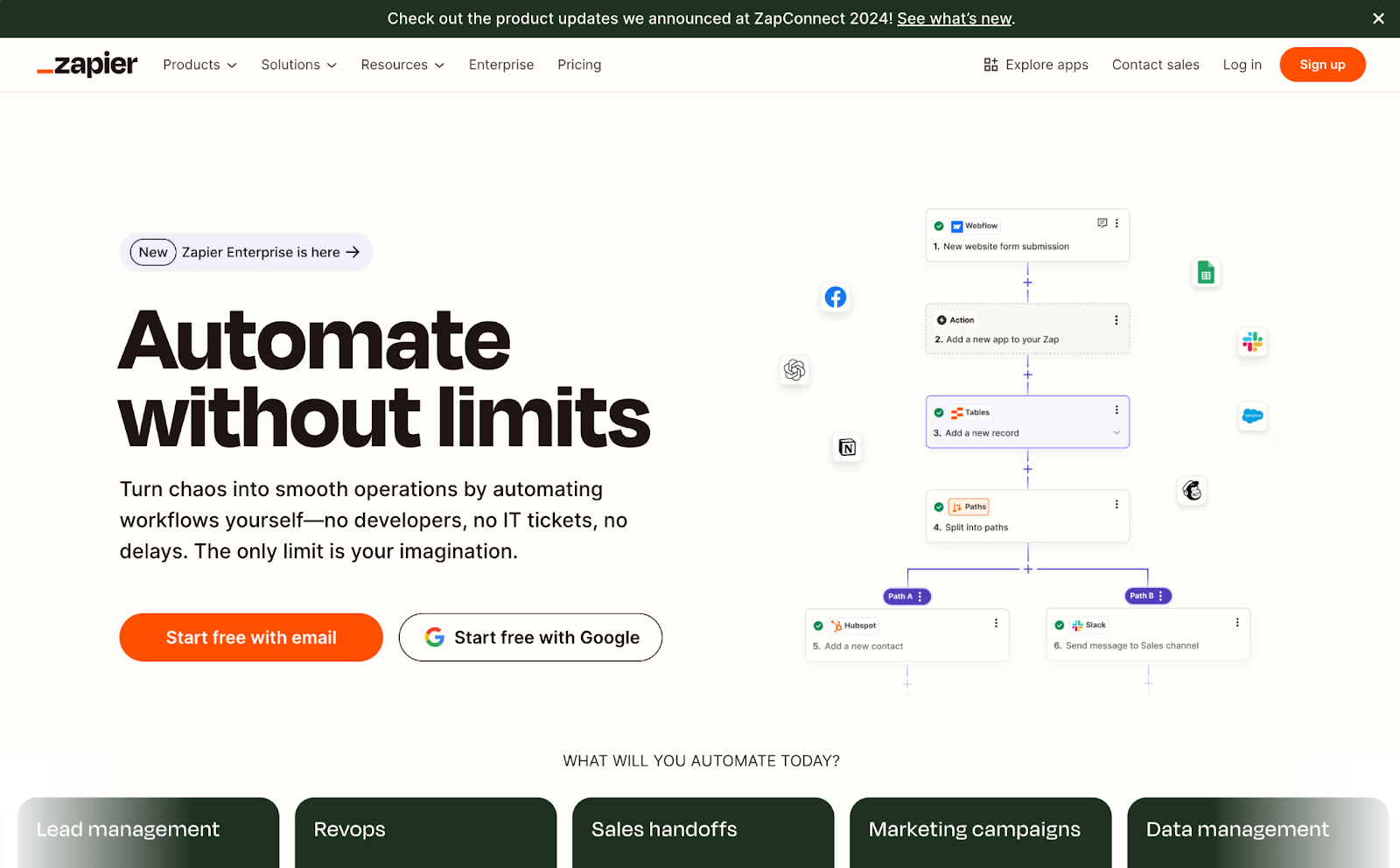
Zapier is one of the most popular automation tools around.
It’s super handy if you need to automate how your data moves across apps, without having any technical background or expertise.
Zapier connects with over 5,000 apps. This makes it easy to create automated workflows (called “Zaps”) that keep your data flowing smoothly between tools like Google Sheets, CRMs, and more.
For example, Zapier can take new data added to your email marketing tool and automatically sync it with your database, saving you from the hassle of making endless manual updates.
Zapier Pros
- Super easy to use, even for non-technical people
- Comes with thousands of integrations
Zapier Cons
- Pricing increases super quickly as you add automations
- With more complex data workflows, you’ll feel limited
- Data transformation capabilities are limited
Zapier Pricing
Zapier offers a free plan for basic automations, with paid plans starting at $19.99/month for higher limits and advanced features.
7. Tray.ai
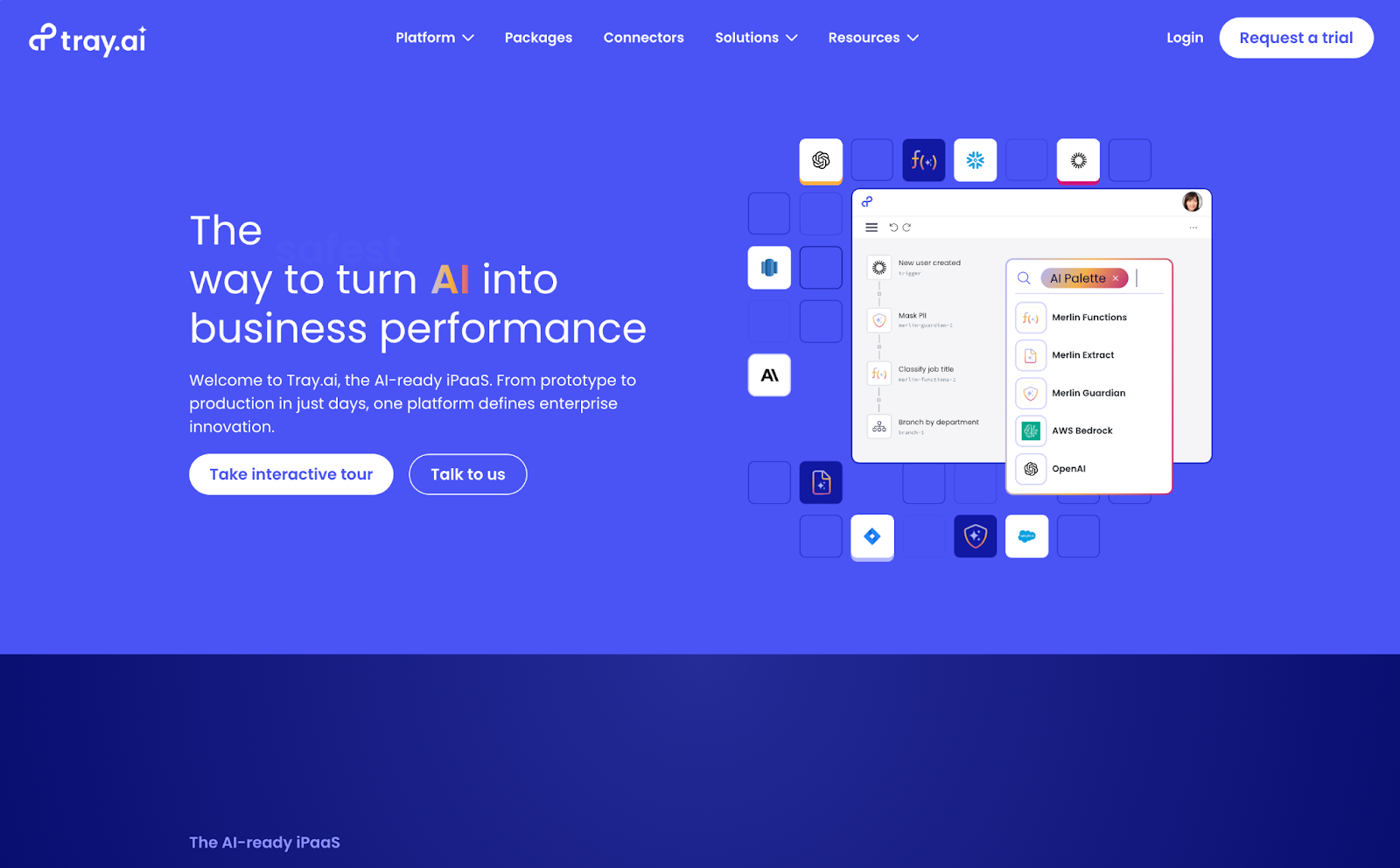
Tray.ai’s drag-and-drop interface makes it possible for non-technical teams to build automations and workflows that involve hundreds of apps.
Tray.ai supports over 600 integrations, allowing you to automate anything from CRM updates to marketing operations, all in one place.
It’s also designed to scale, making it a solid pick if you expect your data needs to grow.
Tray.ai Pros
- Can handle complex data workflows
- Scales well with growing datasets
Tray.ai Cons
- It is advanced and comes with a steep learning curve
- Pricing is expensive, custom, and requires speaking with a sales rep to receive
Tray.ai Pricing
Tray.ai doesn’t have set pricing, so you’ll need to reach out for a custom quote. Plans start with 250,000 task credits and scale up for larger businesses.
8. Workato
Workato is made for enterprises that need to automate data processes across many different apps, both cloud-based and on-premises.
With Workato, you can automate everything from simple data syncs to more complex, multi-step workflows that involve moving data between several apps.
It’s also designed to be user-friendly, so even if you’re not super technical, you can still create automations (called “recipes”) for your workflows.
And for those who are more tech-savvy, Workato has advanced features like AI-powered automations and API integrations.
Workato Pros
- It’s great for larger companies with more complex data needs
- Has advanced features like API integrations and AI-powered automations
Workato Cons
- It’s expensive, starting at $10,000 per year
- There’s a steep learning curve to it
Workato Pricing
Workato starts at $10,000 per year, with custom pricing based on the number of automations you need.
9. Power Automate
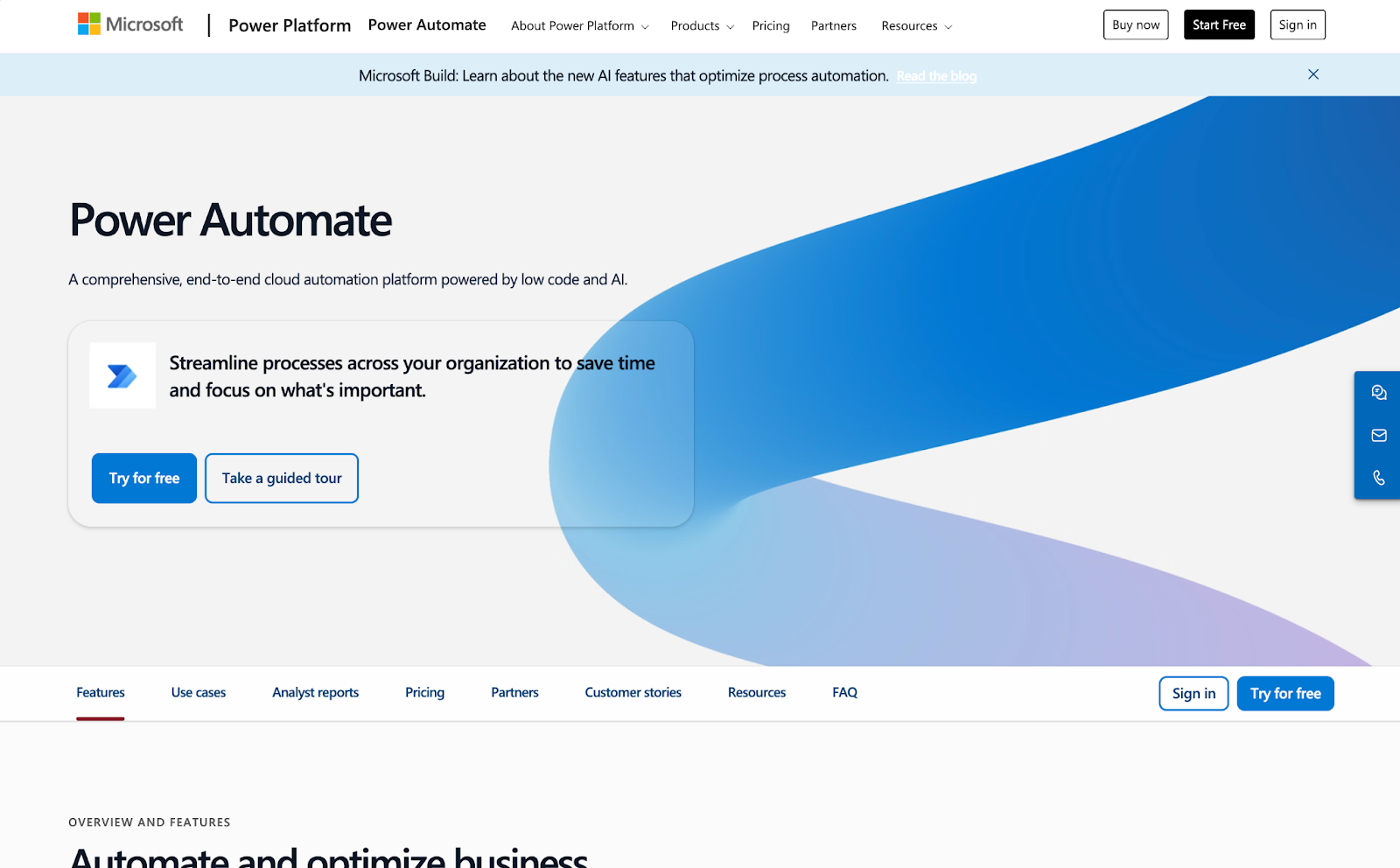
If you’re already using Microsoft tools like Office 365, SharePoint, or Teams, Power Automate is a great pick.
It’s solid for simplifying repetitive tasks, whether that’s moving data between apps, managing approvals, or triggering notifications.
Plus, Power Automate integrates directly with the Microsoft suite, making it easy to connect data and processes across your business.
With its AI-powered features and process mining, Power Automate can help you to automate everything from routine tasks to more advanced operations.
Power Automate Pros
- Easy to use
- Connects with Microsoft ecosystem
Power Automate Cons
- Doesn’t integrate well with non-Microsoft apps
- Pricing increases fast with usage
Power Automate Pricing
Power Automate starts at $15 per user per month, with add-on costs for more advanced workflows. A free trial is available if you want to test it out.
10. Informatica
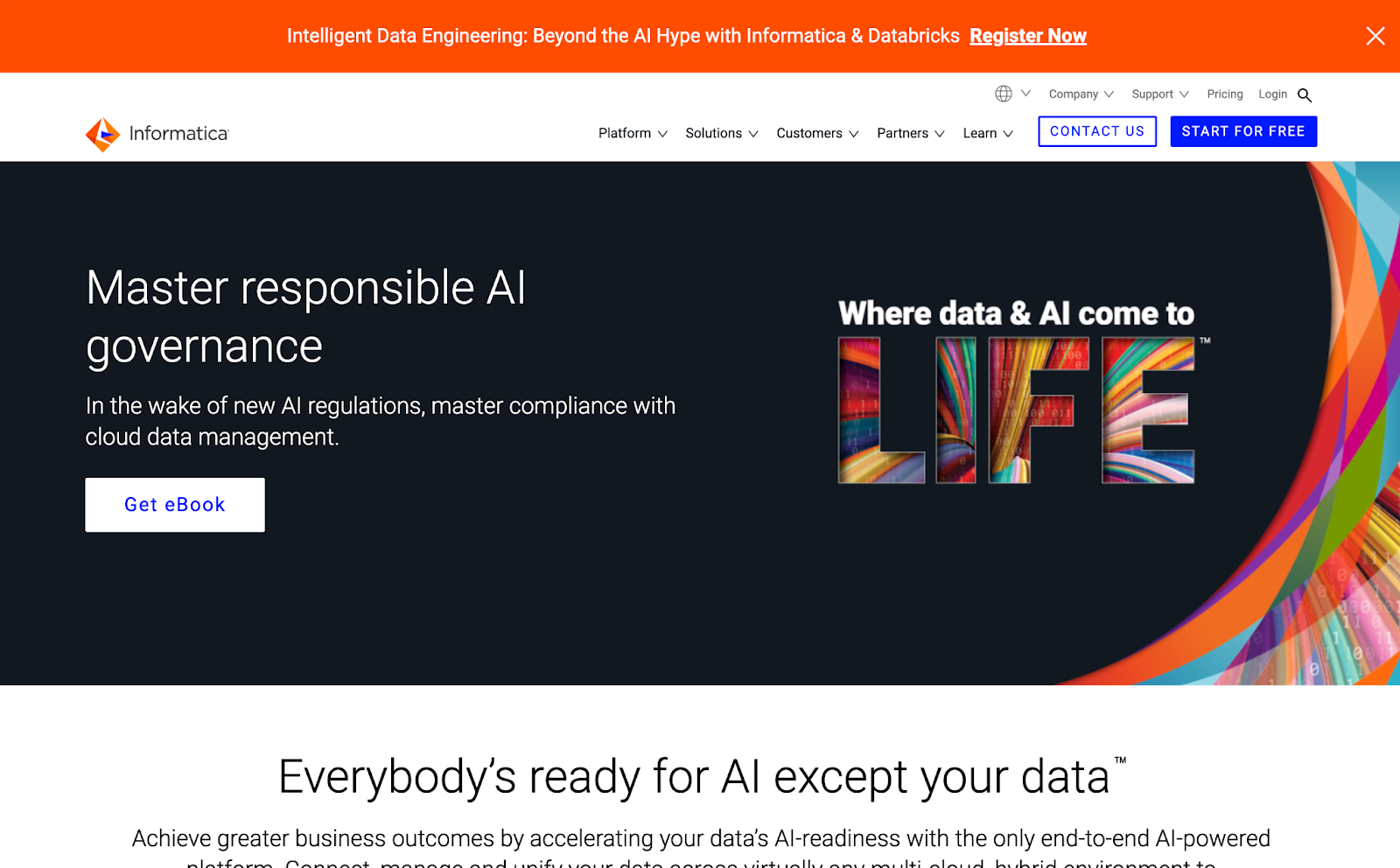
Informatica works best for very large enterprises that need advanced data automation.
Their Intelligent Data Management Cloud (IDMC) is built to handle vast amounts of data across cloud, on-premises, and hybrid environments.
One of the standout features of Informatica is their AI engine, CLAIRE, which automates processes and provides personalized insights to help you manage your data more efficiently.
Whether you’re automating data integration, improving data quality, or managing governance, Informatica has you covered from start to finish.
Informatica Pros
- Great for large-scale data needs
- Comes with AI-driven automation
Informatica Cons
- Too expensive for small teams
- Steep learning curve
Informatica Pricing
Informatica’s pricing is custom, with estimates ranging from $100,000 to $500,000+ per year, depending on usage.
11. UiPath

UiPath is fantastic for automating data processes with Robotic Process Automation (RPA).
It’s ideal for tasks like data entry, file management, and even more complex workflows involving data from multiple systems.
UiPath’s bots can work on their own (unattended) or alongside your team (attended), with flexibility based on your needs.
IT also comes with an AI-powered Automation Cloud and Data Service, which gives you AI-driven tools to improve your accuracy and speed in working with your data.
UiPath Pros
- UiPath’s bots use AI to handle more complex workflows
- Has an easy-to-use, drag-and-drop interface
UiPath Cons
- Becomes very expensive, very quickly
- It has a steep learning curve and takes time to master
UiPath Pricing
UiPath offers a free version for smaller tasks, but for more advanced features, pricing starts around $420/month (with custom plans available for larger setups).
12. Parabola
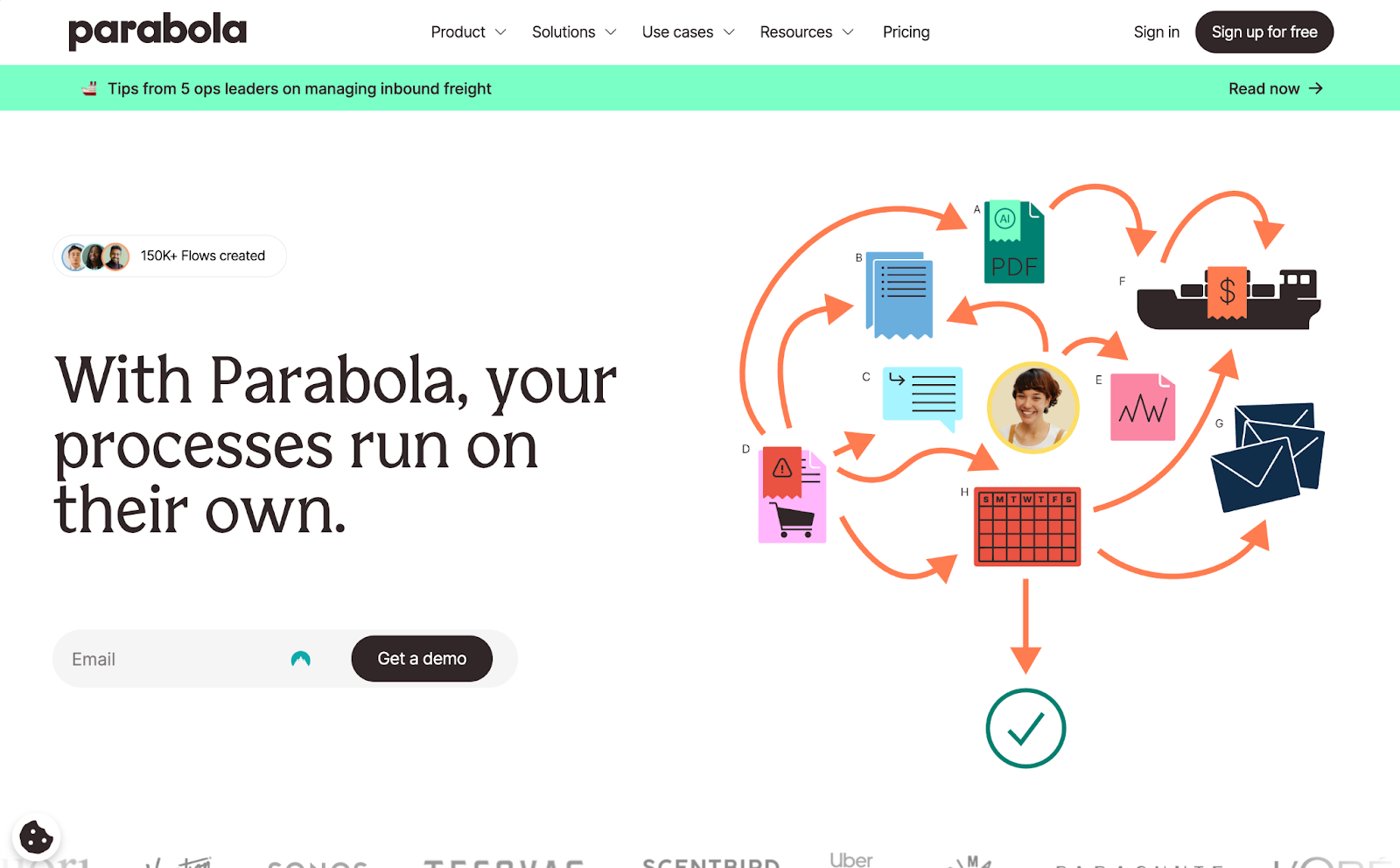
Parabola’s no-code, drag-and-drop interface makes it super easy to automate tasks like importing, transforming, and exporting data from multiple sources.
If you’re tired of manually copying data between platforms or dealing with messy spreadsheets, Parabola can help simplify the process, saving you tons of time and effort.
It’s specifically great for e-commerce businesses, marketing teams, and anyone dealing with data from apps like Google Sheets, Shopify, or Salesforce.
Parabola Pros
- No-code, and easy-to-use
- Great for both small and large teams
Parabola Cons
- Steep learning curve
- Advanced transformations may require coding
Parabola Pricing
Parabola offers a free plan for smaller needs, with paid plans starting at $80/month.
13. Apache NiFi
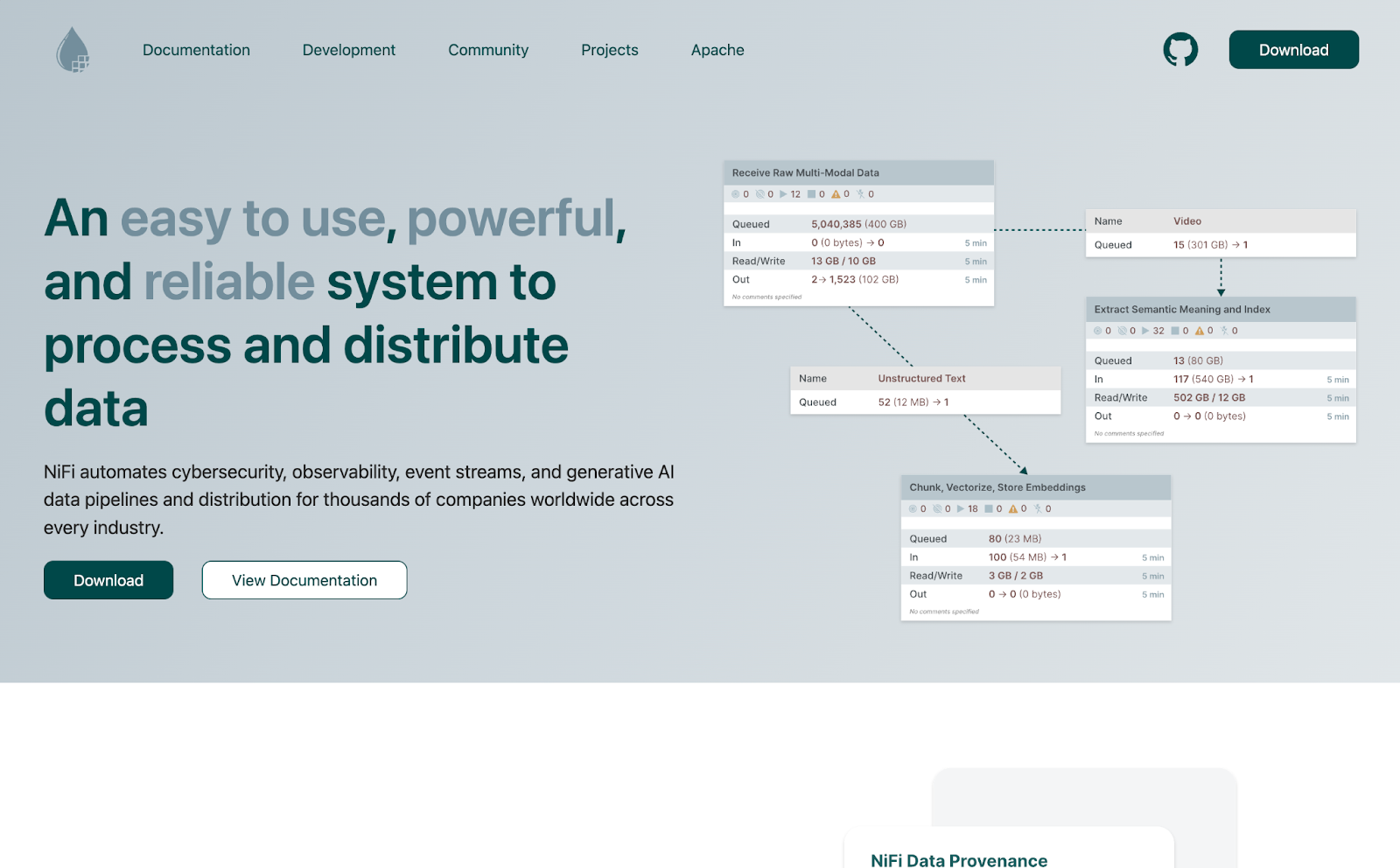
If your business needs to handle lots of data fast, whether for analytics, IoT, or data integration, Apache NiFi can help keep everything moving smoothly.
One of NiFi’s strengths is its ability to process large amounts of data in real time, making it a great fit if you need to move data quickly and securely.
It’s also packed with great data security features, like encryption and fine-grained access control, so you know your data is always safe.
Apache NiFi Pros
- Real-time data processing
- Easy to use
- Strong security features
Apache NiFi Cons
- Resource-heavy
- Smaller community
Apache NiFi Pricing
NiFi is open-source, so it’s free to use, though you’ll need to account for infrastructure costs based on your needs.
What to Look for in Data Automation Tools
When you’re picking a data automation tool, it’s all about finding one that not only saves you time but also makes managing your data easy and efficient.
You want it to handle the heavy lifting, so you don’t have to worry about repetitive tasks or messy workflows.
We’ve looked at some of the best tools out there, but let’s break down what really makes them great and what you should be paying attention to when choosing one for your business.
After digging into the experiences of all the great data automation software, we found 8 key items that separate the good tools from the greats:
- 💰 Pricing
- 😌 Ease of Use
- ⚡ Speed
- 🔌 Integrations
- 🔒 Security
- 📞 Support & Training
- ✨ Customization
Every tool will claim to be the best, but by focusing on these key factors and paying attention to real-world feedback, you’ll get a clearer idea of which tool is the right fit for you.
Hopefully, this guide has been useful in helping you choose your next data automation software. If you have any unanswered questions feel free to reach out and we’ll be happy to help.
If you’d like to give Mammoth a try, sign-up for a 100% free trial here.