Import files from Google Drive into Mammoth
The Google Drive connector opens a file from your Drive and saves it in Mammoth as a dataset. You sign in with your Google account, so there are no credentials to manage. Open it from Data Library > New dataset > Connectors and search for Google Drive. Project Admins create the connection; Project Editors can start datasets from a connection the project already has. Which connectors you can add depends on your plan.
What you can bring in from Google Drive
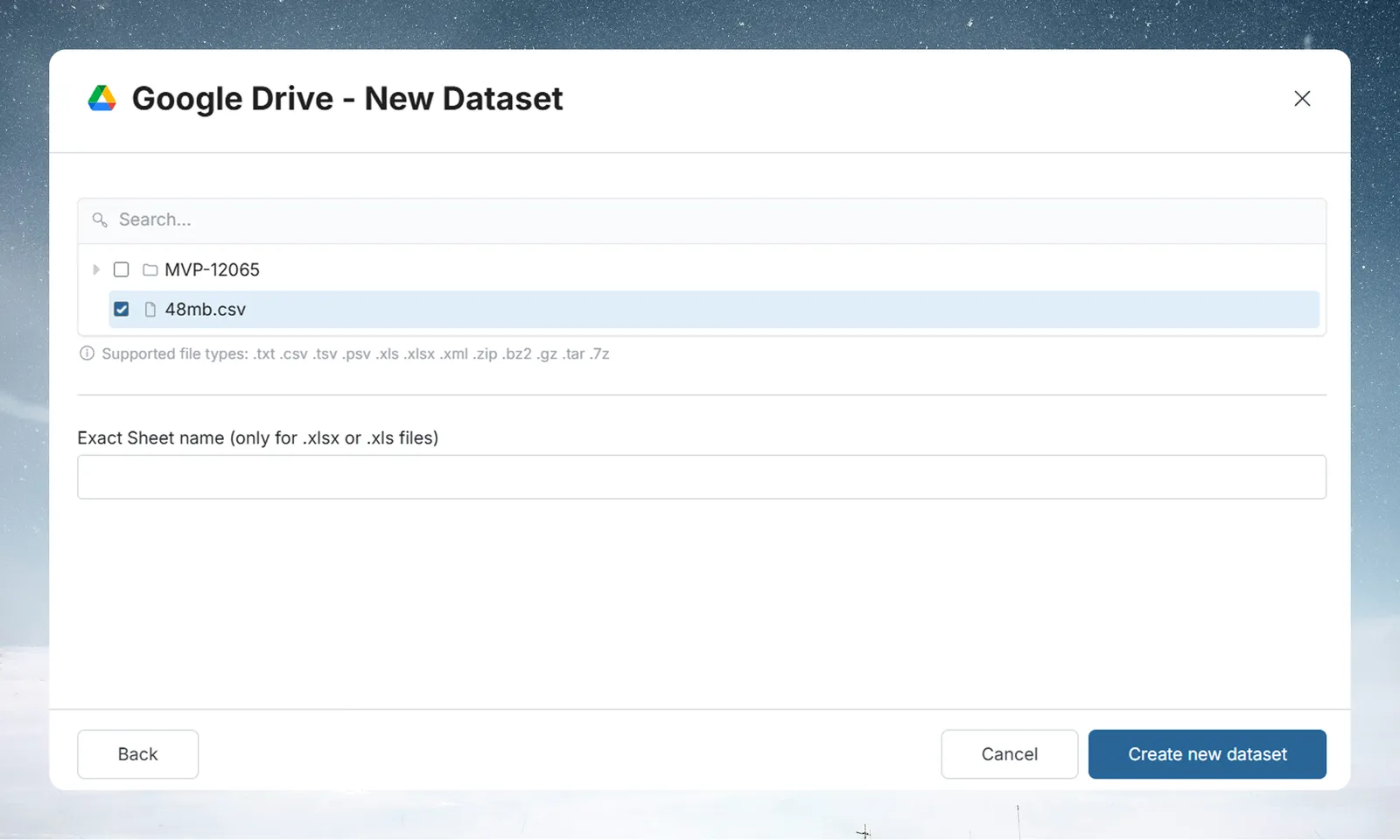
Files of these types: .txt, .csv, .tsv, .psv, .xls, .xlsx, .xlsm, .xml, .json, .jsonl, .ndjson, .zip, .bz2, .gz, .tar, .7z.
A spreadsheet file opens to its tabs. For a Google Sheets spreadsheet, use the Google Sheets connector, which can refresh daily.
Before you connect Google Drive
You need a Google account with access to the Drive files you want to import.
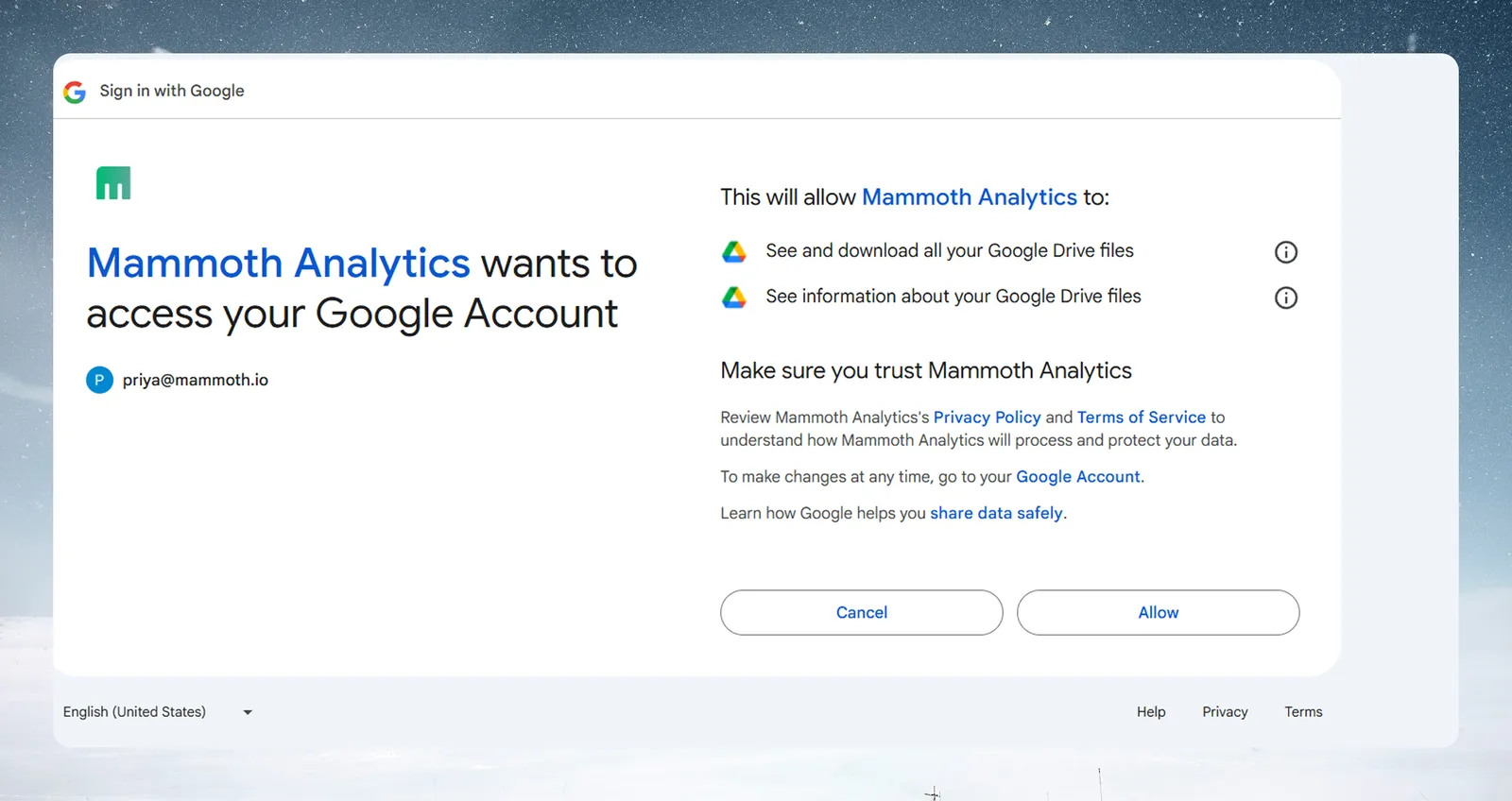
Mammoth asks for read-only access: it can view and download your Google Drive files and see your email address. It can't change anything in your Drive.
Connect Google Drive to Mammoth
- Go to the Data Library, click New dataset, and choose Connectors.
- Search for Google Drive and click its tile. The connector workspace opens with the Chat connecting Google Drive.
- In the chat's card, click Sign in with Google. Google's authorization page opens in a pop-up window, or in the same tab if your browser blocks pop-ups.
- Pick your Google account, then click Allow. A connection made from the chat can read all of your Drive.
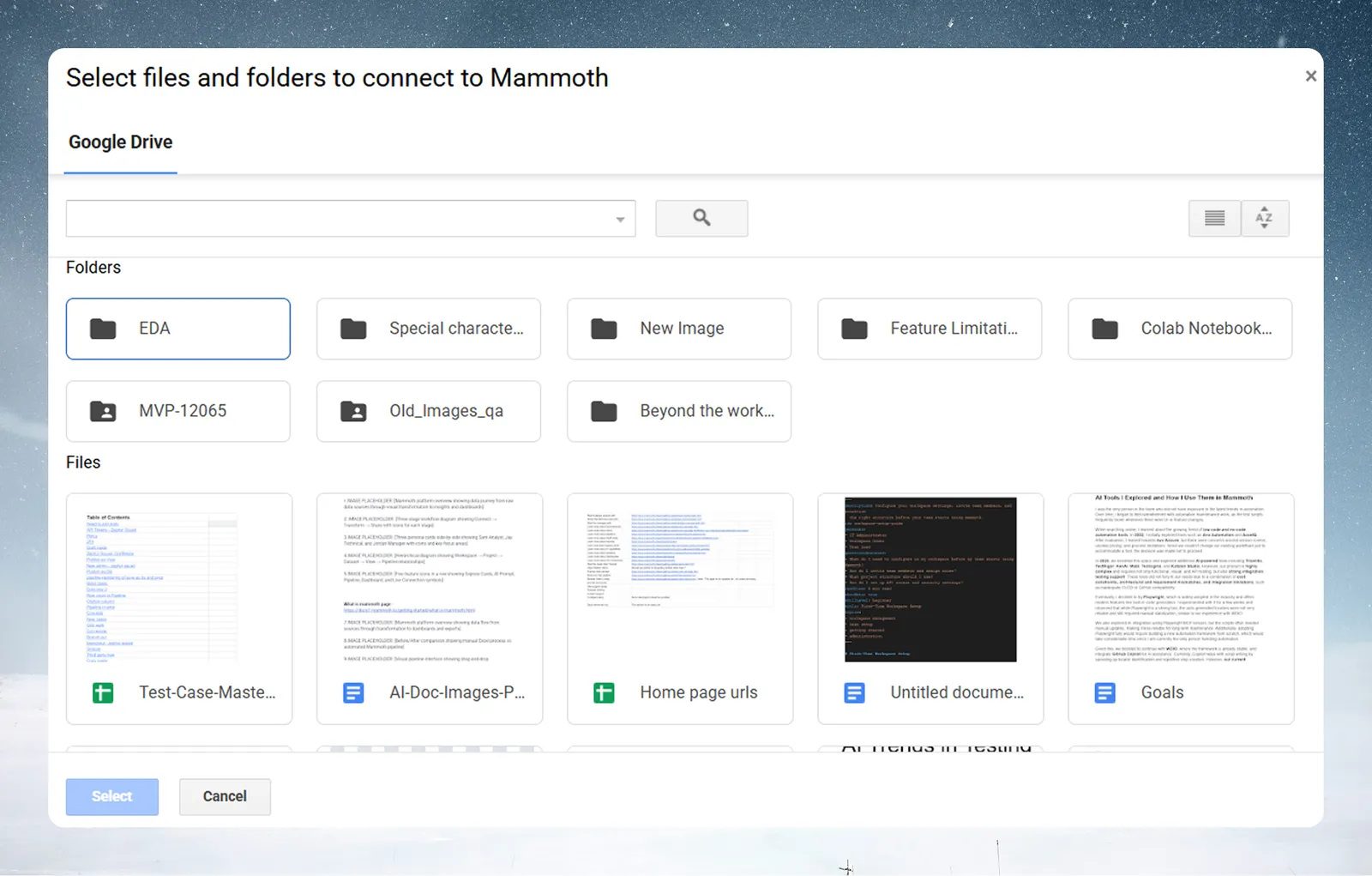
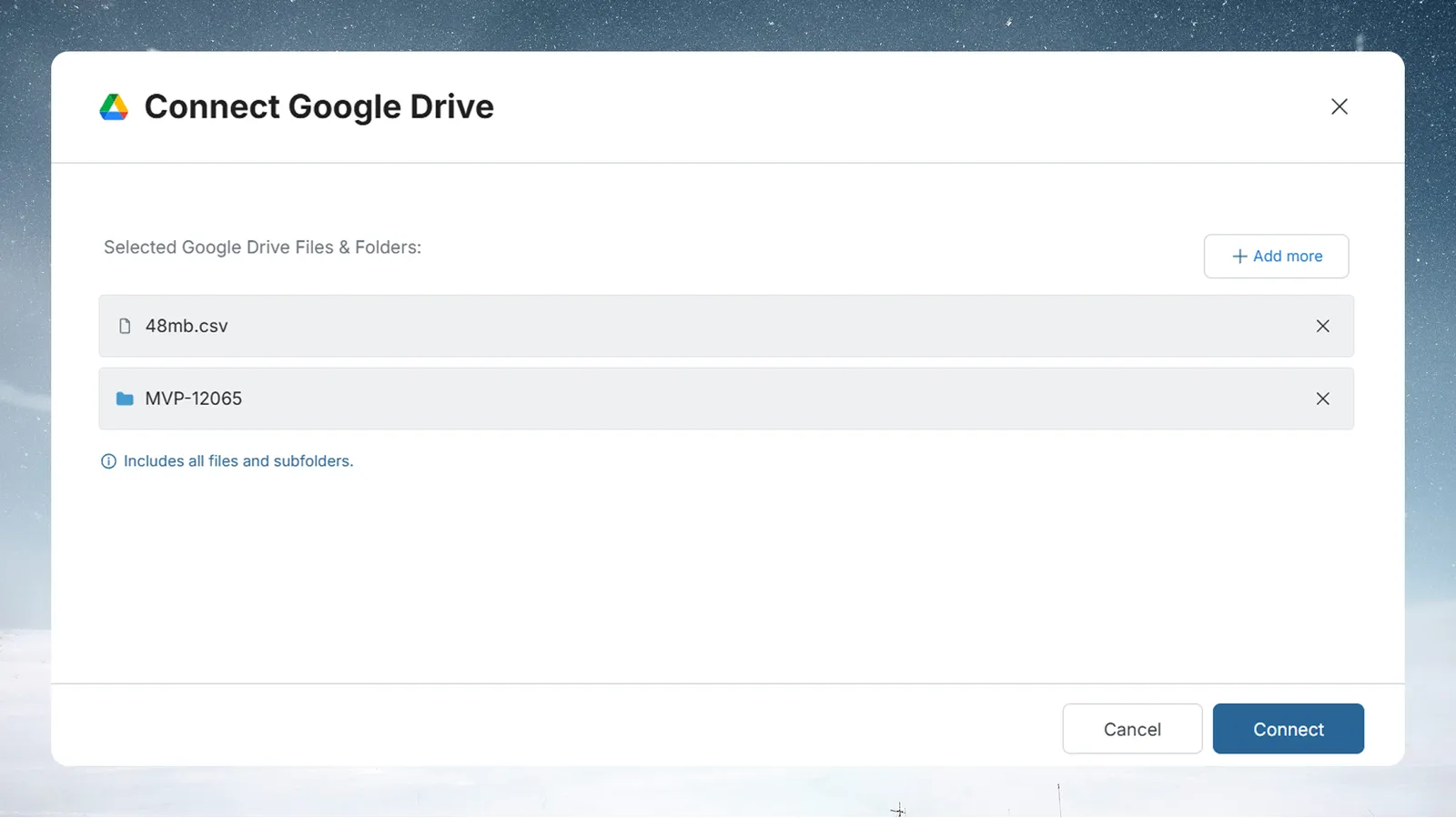
When you add Google Drive from Data → Connections instead, Mammoth asks you to pick files and folders (Select Google Drive Files & Folders). Choose them in Google's file picker, click Select, then click Connect. A folder includes all files and subfolders within it.
If the project already has a Google sign-in, clicking the Google Drive tile opens that sign-in's files instead of a new chat. You can also pick a saved connection under Your connections in the launcher. See Connect a database or app for the shared steps.
Open a Google Drive file and pick columns
- In the left panel, browse your Drive folders and click a file to open it. A spreadsheet opens to its tabs.
- Tick the columns you want. They gather in Your table.
- If a file can't open in the panel yet, ask the agent in the Chat to import it.
Save a Google Drive file as a dataset
- Click Save as dataset.
- Enter a Dataset name and pick the folder under Save in.
- Click Save.
A dataset from a Drive file is saved once. Mammoth shows Saved once. Scheduled refresh for files is coming. A Dataset Refresh automation can't re-read Google Drive files.
Bring in new Google Drive files on a schedule
To keep adding files as they land in a Drive folder, use two automations:
- A File Collection automation collects new files from the Drive folder into Mammoth on a schedule. See What you can automate.
- A Data Consolidation automation adds the collected files to your dataset.
Troubleshoot Google Drive connections
| Symptom | Likely cause | Fix |
|---|---|---|
| You aren't returned to Mammoth | You denied access or closed the tab during sign-in | Start the connection again; Mammoth returns you after you click Allow |
| A message says the Google Drive picker failed to load | The picker didn't load in the page | Refresh the page and try again |
| "Session expired. Please reconnect Google Drive." | The Google sign-in expired | Sign in with Google again |
| "No files found." | The selected items contain no supported file types | Select a different file or folder, and check the file types listed above |
Related
- Google Sheets: import a spreadsheet tab that refreshes daily.
- Connect a database or app: the shared connector workspace steps.
- Combine incoming data: add collected files to one dataset.
- Upload files: bring in a file from your computer instead.
- Manage saved connections: reuse or remove this connection.
Something wrong? support@mammoth.io