Connect Oracle NetSuite to Mammoth
The Netsuite connector imports ERP and accounting data from your Oracle NetSuite account into Mammoth as a dataset. You sign in to NetSuite and pick the account; there are no API keys or account URLs to enter. Open it from Data Library > New dataset > Connectors and search for Netsuite. Project Admins create the connection; Project Editors can start datasets from a connection the project already has. Which connectors you can add depends on your plan.
What you can bring in from NetSuite
- Record tables the signed-in role can see, and the columns you tick.
- Data you ask for in the Chat, for example "which table has invoice due dates?"
The dataset can refresh daily or only when you ask.
Before you connect NetSuite
You need a NetSuite account, and a sign-in whose role can see the records you want to import.
Connect NetSuite to Mammoth
These steps follow the shared flow in Connect a database or app.
- Go to the Data Library and click New dataset.
- Choose Connectors.
- Search for Netsuite and click its tile. The connector workspace opens with the Chat showing.
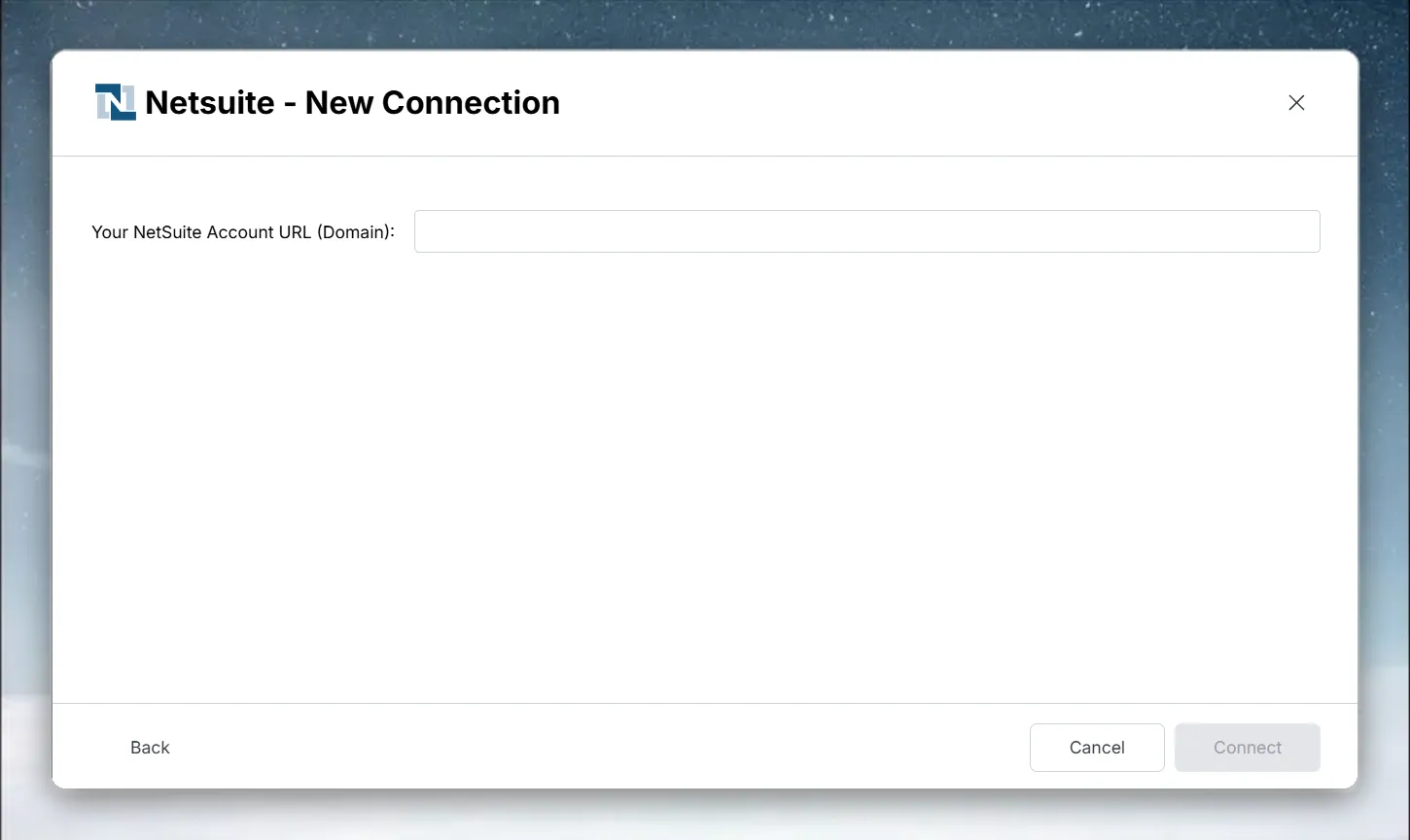
- In the Chat, Mammoth shows a card for connecting NetSuite. Click its sign-in button.
- Mammoth sends you to NetSuite's sign-in page (system.netsuite.com). Sign in with your NetSuite credentials.
- Pick the NetSuite account to connect, and authorize Mammoth.
- You return to Mammoth with the connection active. NetSuite tells Mammoth which account you picked, so you don't enter an account ID or URL.
Pick NetSuite tables and columns
- In Tables, click a table to see its columns and sample rows.
- Tick the columns you want. They gather in Your table.
- Click Preview 100 rows to check the result.
If you're not sure which table holds what you need, ask in the Chat.
Save NetSuite data as a dataset
- Click Save as dataset.
- Enter a Dataset name and choose a folder under Save in.
- Choose Daily to refresh the dataset every day, or Manual to refresh it only when you ask.
- Click Save. When the dataset is ready, click Open dataset.
Refresh NetSuite data and choose an update method
Choosing Daily creates a Dataset Refresh automation for the dataset. To run it on another schedule, edit that automation. For a dataset saved with Manual, create a Dataset Refresh automation yourself.
After you save, the dataset's Update method setting offers only two options:
| Update method | What it does |
|---|---|
| Replace all data | Rebuilds the dataset from the source on every refresh |
| Add to existing data | Adds the rows each refresh brings in to the rows you already have |
NetSuite refreshes don't track a key column, so there is no key column to pick.
Troubleshoot NetSuite connections
| Symptom | Likely cause | Fix |
|---|---|---|
| Authorization doesn't complete | You closed the tab or denied access | Start the connection again |
| The wrong NetSuite account is connected | Another account was picked at sign-in | Connect again and pick the account you want on NetSuite's sign-in page |
| A record type isn't visible | The signed-in role lacks permission on it | Ask your NetSuite admin to check the role's permissions |
Related
- Xero: import accounting data from Xero.
- Connect a database or app: the shared connector workspace steps.
- Manage saved connections: reuse, edit or delete this connection.
- Refresh a dataset: change when the dataset refreshes.
- Connector reference: every source Mammoth connects to.
Something wrong? support@mammoth.io